Laying Some Track
After a three-month hiatus, it was decided that the Christmas period would be an ideal opportunity to make some more progress on Erik’s railway. So we invited Brian round for lunch and got cracking!
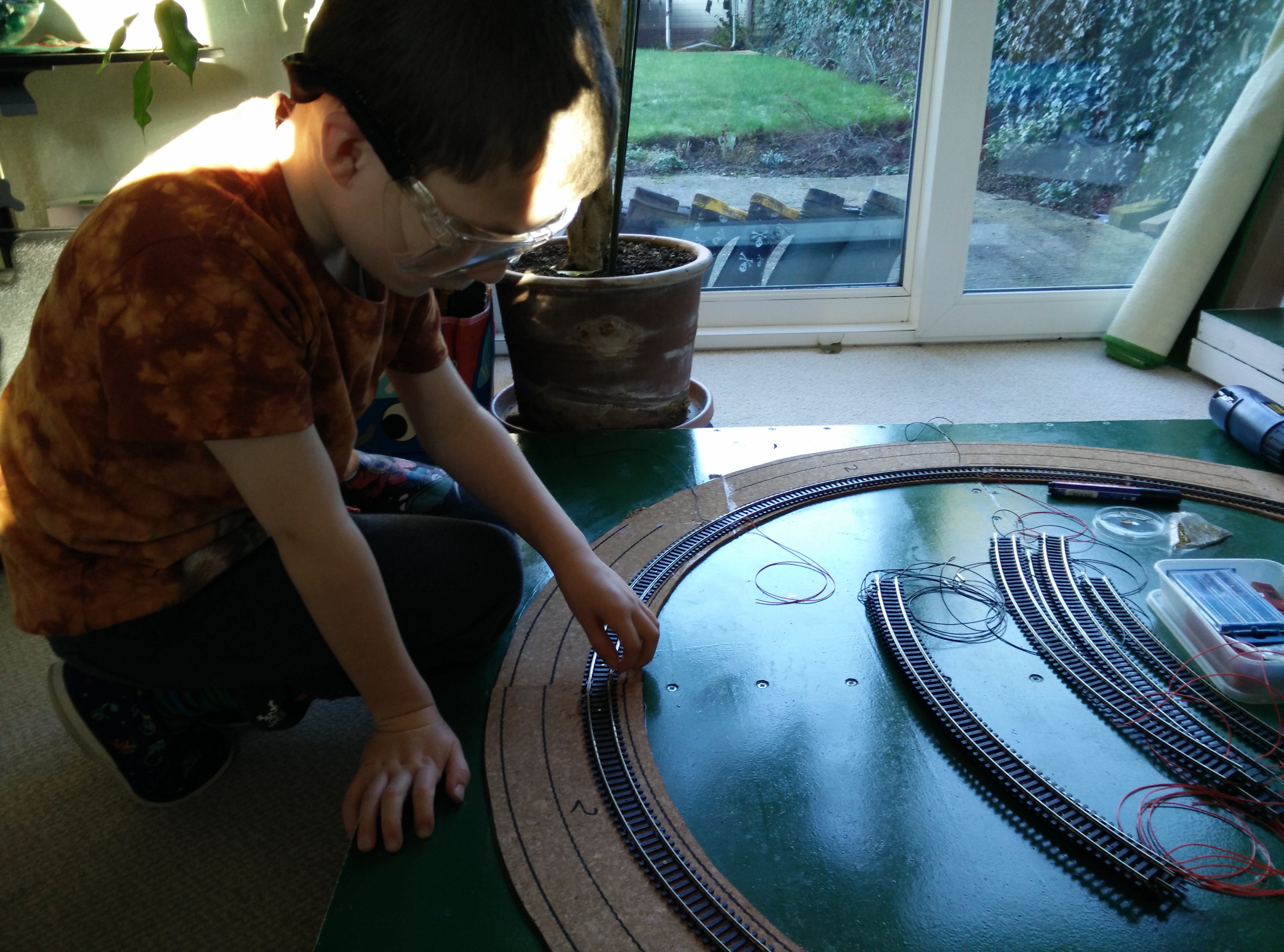 The first task was to assemble to four semi-circles of track using the pieces to which we’d previously soldered dropper wires. The rail joiners were removed from each of the eight pieces of track that bridged the board interface, as they were not required. Lining up of the rails is accomplished using the boards’ pattern makers dowels.
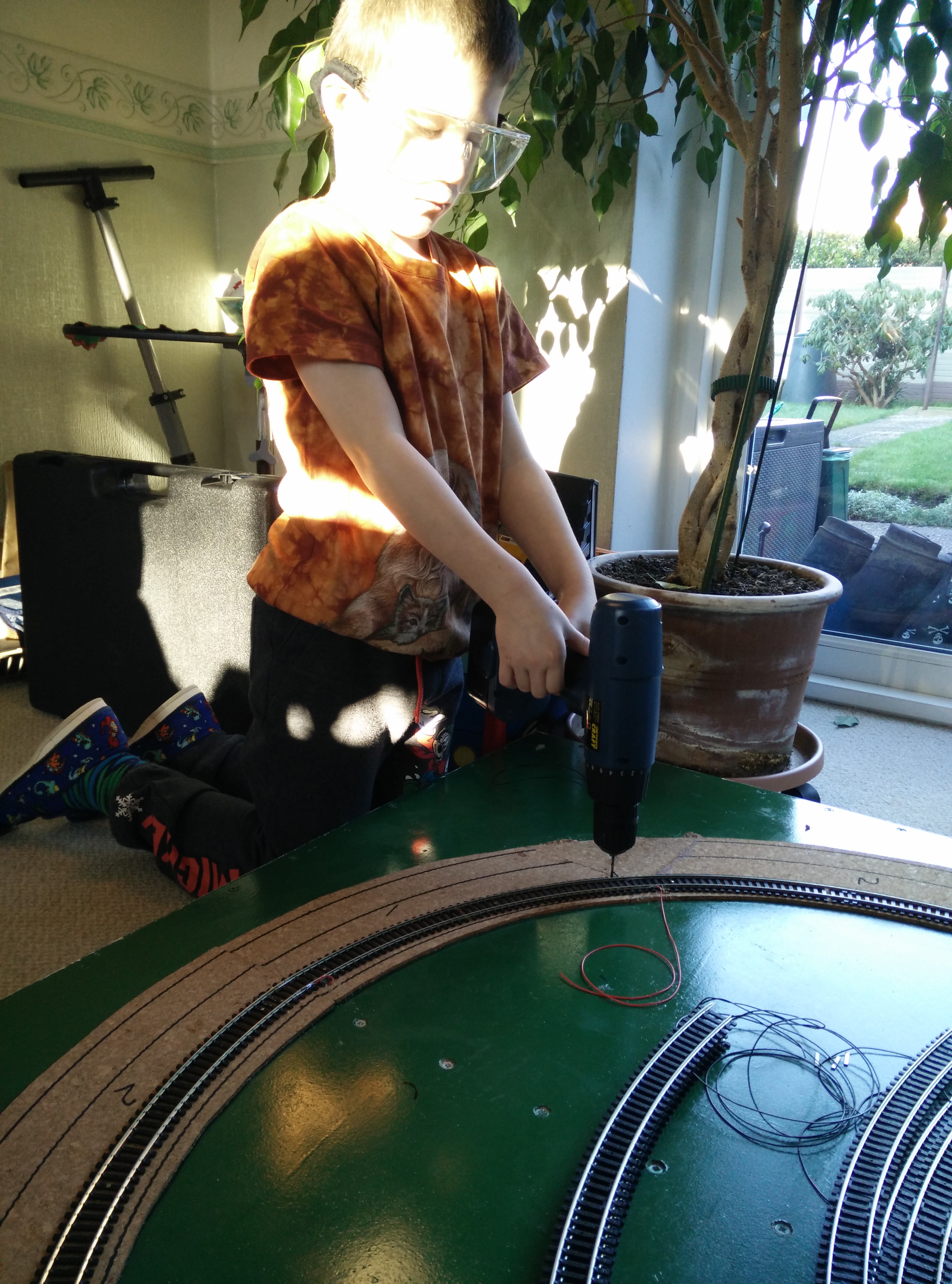
Where each of the dropper wires touched the cork tiles, a hole was required so that it could pass through the board to the underside. As repetition is the time-tested method of learning, Erik got to drill all 32 holes!
He also pinned the track down, using PECO IL-11 brass rail nails. We used these as it’s highly likely that these boards will be reused, so they’ll be easy to remove. These were installed using the predrilled holes in the track, and a small cross-pein hammer, the flat pein fitting comfortably between the rails to avoid damage to the track.
Erik did a fantastic job with all of these tasks.
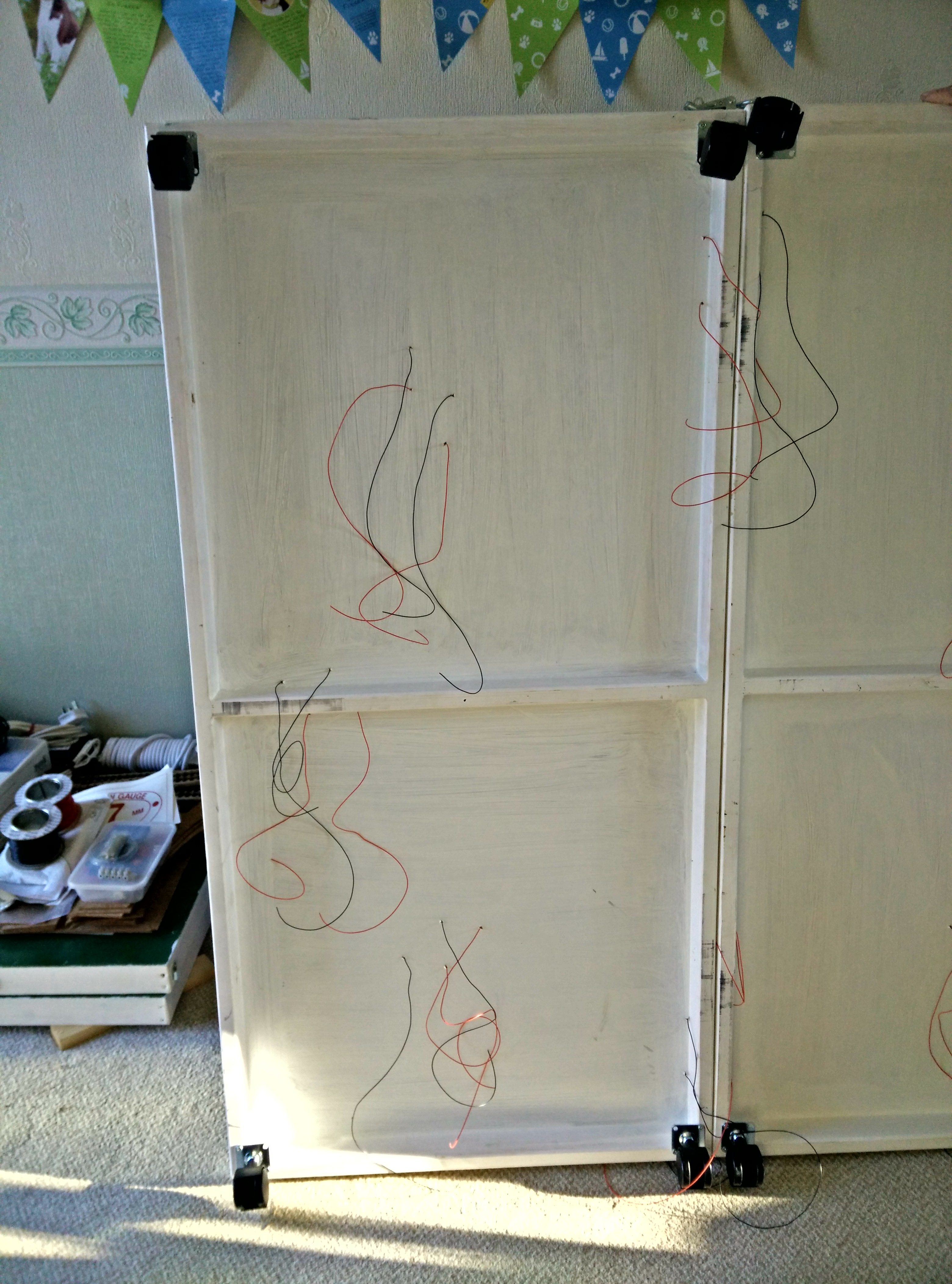 Underneath, it looks like this! Using some larger cable in the same colours, a power bus was created under the boards, eliminating the need for rail joiners to transmit the current around the circuit.
At the present time, the joint are simply chocolate blocks but these may well be replaced by soldered tag strips for robustness.
The join between the boards is a simple Tamiya battery connector. These are handed, so cannot be connected the wrong way round, and screened, so little hands can’t touch flowing current. Each of the boards will be fitted with these, enabling the centre boards to be easily inserted into the layout.
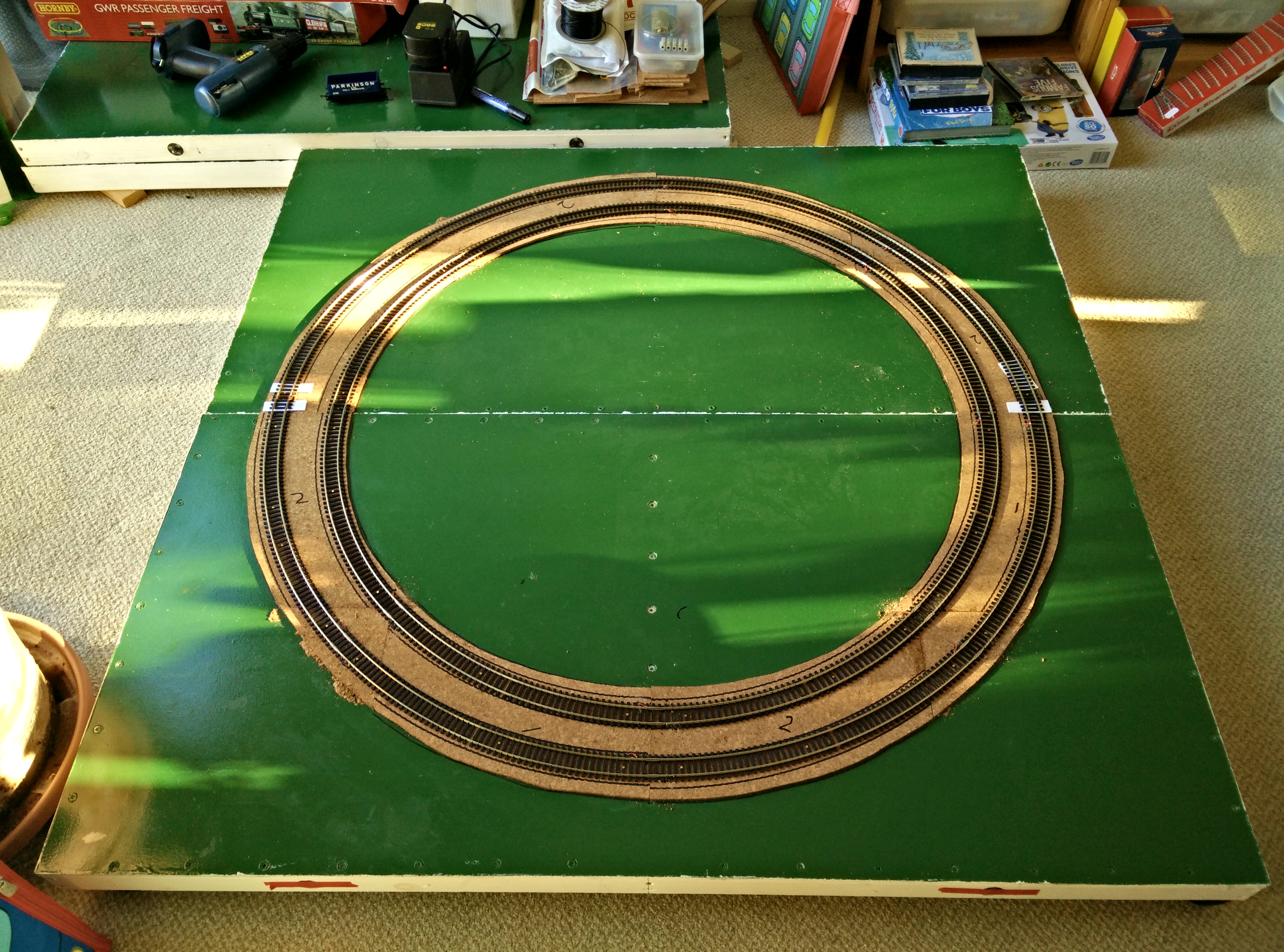 And here it is, the finished article. Well, that’s not quite true of course but the goal of the day was accomplished, being two laid and wired concentric circles of track.
Not pictured was the hole in the corner through which the main power bus is brought up to the controller, a Digitrax DC50 Zephyr unit, which will sit in the corner of the furthest board.
Once again, thanks to Brian for his guidance. He was actually equally busy being rather more destructive!